



Best Dental Istanbul · International patient guide 2026
Veneers in Turkey: Cost, Types, Process, Safety and Real Cases
A detailed guide for international patients comparing veneers in Turkey and veneers in Istanbul, including candidacy, tooth preparation, material choice, tooth-count planning, cost factors, treatment stages, risks, aftercare, clinic checks and real case photographs.
*These are planning ranges, not guarantees. Examination findings, preliminary treatment, trial stages and laboratory revisions can change the timetable.
The Ministry list dated 11 May 2026 includes Özel Best Dental İstanbul Ağız ve Diş Sağlığı Polikliniği at Yalı Ataköy, Bakırköy, with telephone +90 212 877 29 29. The clinic also publishes certificate reference ST-2668.
Veneers in Turkey: the direct answer
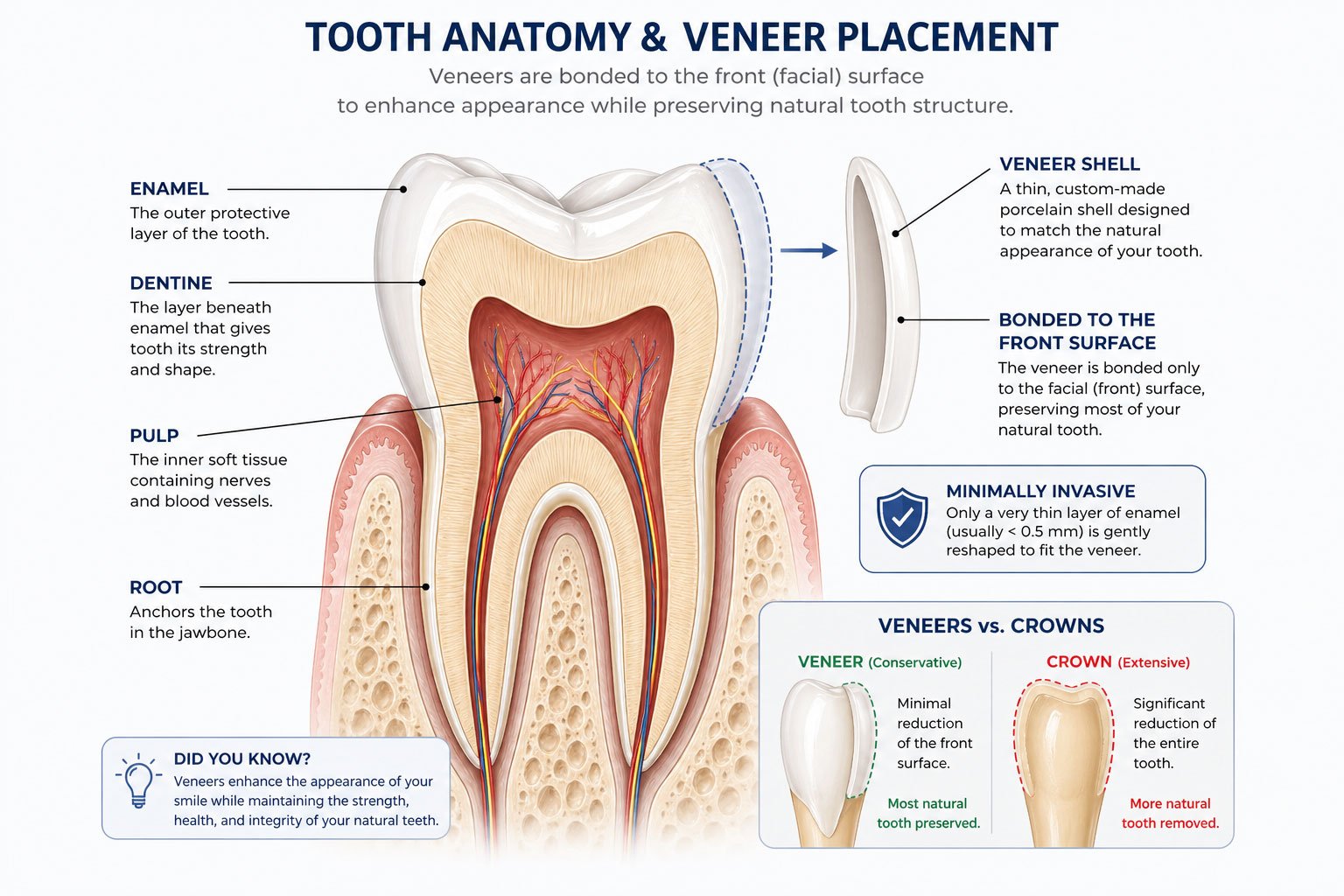
Dental veneers in Turkey are ceramic or composite restorations bonded to selected tooth surfaces to change visible colour, shape, length or proportion. A veneer normally covers mainly the front surface; a crown surrounds most of the visible tooth. The final restoration type, tooth count, preparation and fee should be confirmed only after an in-person examination of the teeth, gums, available enamel and bite.
Veneers in Istanbul at a glance
- What is treated?
- Selected visible tooth surfaces where colour, shape, spacing, edge position or proportion can be changed conservatively.
- What is not automatic?
- A package name does not decide the tooth count or restoration type. Each tooth may need a veneer, crown, bonding, orthodontic treatment or no treatment.
- Where is the clinic?
- Best Dental Istanbul is in Bakırköy, Istanbul, Türkiye. The legal facility name, address and telephone should match the Ministry listing and the written treatment documents.
- How long can it take?
- Selected laboratory-made cases may be planned over about 5 to 7 days and several clinical stages. Examination findings and revisions can extend the stay.
- When is the plan final?
- Only after an in-person dental and periodontal examination, with radiographs where clinically indicated.
- What should you take home?
- A tooth-by-tooth record, restoration and material details, radiographs or scans where available, aftercare instructions and a direct clinical contact route.
Are “Turkey teeth” the same as veneers?
No. “Turkey teeth” is a social-media label, not a clinical diagnosis. It may be used for genuine facial veneers, but it is also used for full-coverage crowns placed after much greater tooth reduction. Ask for the restoration type and preparation design for every tooth before treatment. The American Dental Association’s patient guidance describes veneers as shells attached to the front surface of teeth and notes that treatment is usually irreversible.
This distinction matters more than the country name: a veneer and a crown remove and cover different amounts of tooth structure.
What international patients should establish before booking
The useful comparison is not simply “Turkey versus home”. It is whether the named dentist, diagnosis, amount of tooth preparation, restoration type, dental laboratory, consent process, timetable and aftercare plan are clear for your individual case.
Before paying a deposit
Obtain the named treating dentist, a provisional tooth-by-tooth plan, likely restoration types, material, estimated preparation, timetable, inclusions, exclusions, cancellation terms and payment schedule in writing.
Before tooth preparation
Confirm the final diagnosis, radiographs where indicated, gum and bite findings, alternatives, expected limitations, restoration type for every tooth and the amount of healthy tooth structure likely to be removed.
Before permanent bonding
Review fit, shade, visible proportions, contacts and bite at the try-in stage. Ask what can still be changed before permanent bonding and which appearance differences are normal between a preview, temporary restoration and final ceramic.
Before flying home
Collect your final tooth chart, records, material and laboratory information, aftercare instructions, direct clinical contact route and written remedial-care terms. Leave enough time for a final bite check or adjustment.
What are dental veneers?
A dental veneer is a thin shell of porcelain or composite resin bonded permanently to the front surface of a tooth to change its colour, shape, length, or texture. Veneers correct concerns including intrinsic staining that cannot be treated with whitening, chipped or fractured enamel, minor misalignments, gaps between teeth, worn-down edges, and teeth that are naturally too small or irregularly shaped.
Request a preliminary photo assessment
Veneers are a well-established restorative and cosmetic option, but they are not suitable for every tooth or every patient. For someone travelling internationally, the meaningful comparison is the proposed diagnosis and treatment plan: which teeth need treatment, how much enamel would be removed, whether a veneer or another restoration is indicated, who will make the ceramics and how follow-up will work after the patient returns home.
What veneers can change
Veneers can change the colour of teeth that do not respond to whitening: including tetracycline staining, fluorosis, and deep intrinsic discolouration. They can correct chipped, cracked, or worn edges. They can close diastemas (gaps) and improve the appearance of minor crowding or misalignment. They can standardise length and shape across a full arch for a more even, symmetrical smile.
What veneers cannot treat
Veneers cannot correct significant orthodontic misalignment: crowding or rotation that would require movement of the tooth root. They are not appropriate for teeth with insufficient remaining enamel. They do not treat active gum disease, decay, or infection, which must be resolved before any cosmetic work is placed. Veneers cannot substitute for a night guard in patients with severe bruxism: though veneers can be successfully placed alongside one when the grinding is managed.
Veneers, crowns, bonding or orthodontics: which approach fits the problem?
| Treatment | Usually considered for |
|---|---|
| Porcelain veneers | Colour, shape, size correction with conservative prep; long-term aesthetic result |
| Composite bonding | Minor chips, small gaps, budget-conscious cases; shorter lifespan |
| Dental crowns | Heavily restored teeth, root-canal-treated teeth, major structural damage |
| Orthodontics | Significant misalignment, bite issues; moves teeth rather than masks them |
| Teeth whitening | Extrinsic surface staining only; not effective on intrinsic discolouration |
Types of veneers and how they differ
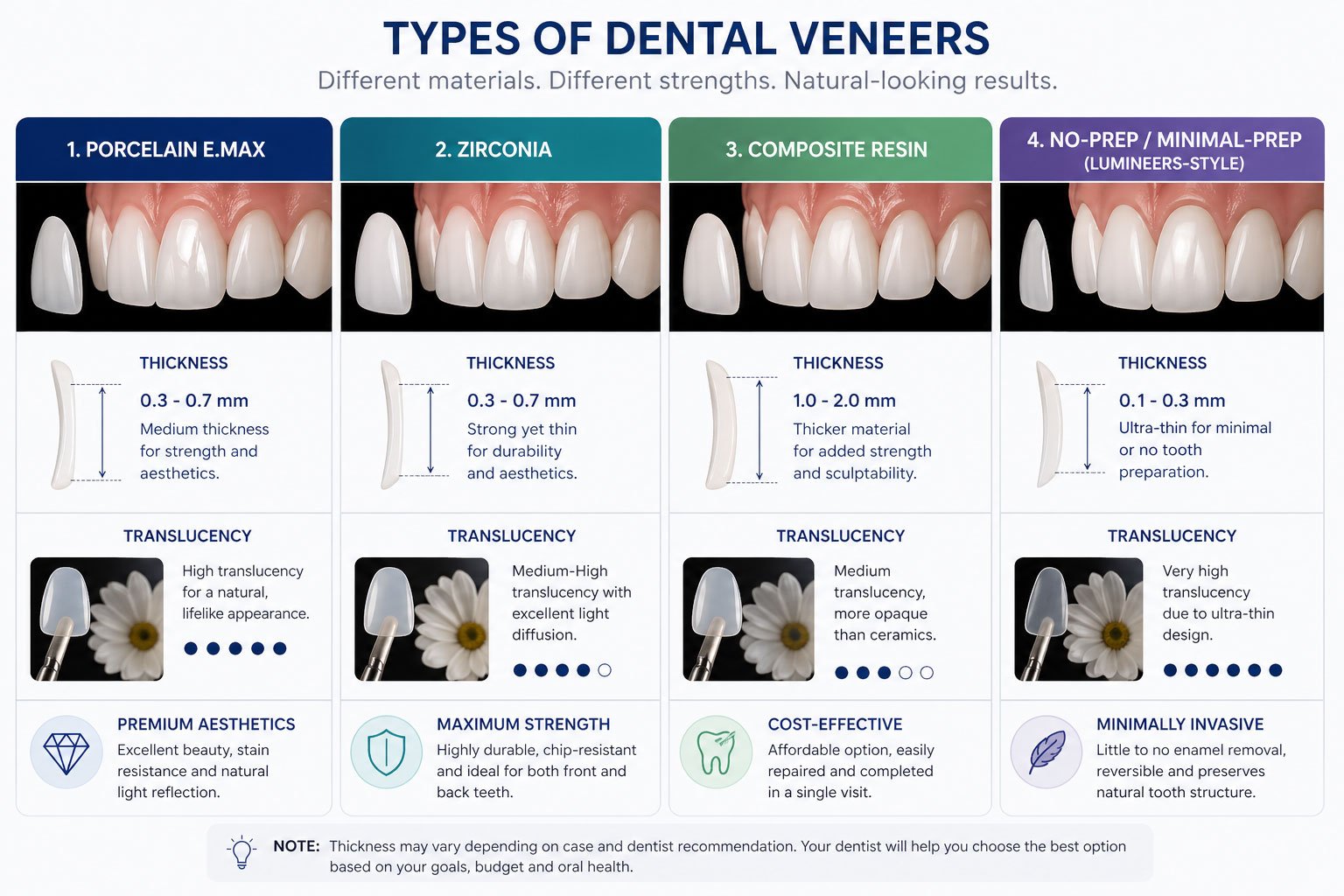
Veneer types are not interchangeable. The right choice depends on the degree of discolouration, the amount of preparation the teeth can tolerate, the patient's bite, and the longevity required. Understanding the differences before booking prevents the most common source of patient disappointment: receiving the wrong type of veneer for their goals. Compare the clinic’s detailed guides to E.max veneers, porcelain versus composite veneers and minimal-prep systems.
| Type | Design and preparation | Usually considered for | Lifespan |
|---|---|---|---|
| E.max Porcelain | Lithium-disilicate glass-ceramic; thickness and preparation vary by tooth and design | Selected aesthetic veneer and crown cases | Case-dependent; high long-term survival is reported in selected veneer studies |
| Zirconia | High-strength ceramic; confirm whether the proposed design is a facial veneer or a crown | Selected situations requiring masking or a different restorative design | Case-dependent |
| Composite Resin | Directly added and shaped by the dentist; preparation varies | Selected small additions, chips, edges and limited corrections | Usually requires more maintenance than ceramic; case-dependent |
| No-Prep / Minimal-Prep | Little or no preparation only where added volume will not create over-contour | Selected tooth positions and anatomies | Case-dependent |
E.max Porcelain Veneers
E.max (lithium disilicate) is one ceramic option considered for selected aesthetic cases. Its optical properties can help a dental technician reproduce enamel-like translucency, while the required thickness and tooth reduction depend on the starting colour, tooth position, preparation design and laboratory prescription. A 2021 systematic review and meta-analysis estimated 95.5% cumulative survival for porcelain laminate veneers at ten years. This describes selected study groups and is not a guarantee for an individual patient.
Zirconia Veneers
Zirconia is a high-strength ceramic, but restorations described online as “zirconia veneers” may in some cases be crowns or other forms of coverage. Its greater opacity can be useful when a darker background needs masking, although the required design must be decided tooth by tooth. Bruxism increases the risk of complications for any ceramic restoration; material choice, bite assessment and protective measures should be planned together rather than assuming that a stronger ceramic removes the risk.
Composite Resin Veneers
Composite veneers are placed and shaped directly by the dentist. They can suit selected additions, edge repairs and limited corrections and are generally easier to repair than ceramic. Composite is more susceptible to wear, surface change and staining, so material choice should follow the clinical objective rather than price or speed alone.
No-Prep and Minimal-Prep Veneers
No-prep and minimal-prep veneers reduce or avoid enamel removal in selected anatomies. They are most plausible where adding ceramic will not make the teeth appear bulky or over-contoured. Suitability depends on tooth position, volume, colour, bite and the planned emergence profile. A proposal for a full arch should therefore explain, tooth by tooth, why no preparation, minimal preparation or conventional preparation is appropriate.
Who may be suitable for veneers?
A good veneer candidate is in stable oral health, has adequate enamel remaining on the teeth to be treated, has realistic expectations about what veneers can change, and is willing to commit to the maintenance routine that ceramic restorations require. Suitability is more favourable when goals are specific, tooth anatomy is carefully assessed and the patient understands that preparation may be irreversible.
Ideal Candidate Profile
A potentially suitable patient has healthy or stabilised gums, no untreated decay or infection, a bonding surface and tooth structure appropriate for the planned restoration, and clear aesthetic goals. Bite forces, clenching or grinding and the ability to attend follow-up reviews must also be assessed.
Oral Health Requirements
Active gum disease, decay, infection or unstable periodontal conditions should be assessed and treated before veneer preparation. Placing restorations over unhealthy teeth may worsen existing problems. The final plan requires a clinical examination and radiographs where indicated; a remote estimate cannot replace this assessment.
Enamel Availability
Veneers bond to enamel. Patients who have had previous extensive dental work, acid erosion, or heavy grinding may have insufficient enamel remaining for reliable bonding. In these cases, crowns may be the more appropriate option. The dentist should assess enamel thickness and remaining structure at the consultation and be transparent about what bonding surface is available.
Realistic Expectations Before Treatment
Veneers can change visible tooth surfaces, but they cannot independently correct every gum, bone, tooth-position or jaw relationship concern. Uneven gum levels may require periodontal, orthodontic or restorative assessment before treatment. Lip movement, facial proportions and the bite also influence how a result appears.
Who Is NOT a Good Candidate for Veneers?
Veneer treatment should be deferred when active disease, untreated infection, unstable periodontal support, unmanaged severe bite forces or inadequate diagnostic information makes the plan unsafe or unpredictable. Goals that cannot be reconciled with clinical limits also require further discussion before irreversible treatment.
How many veneers do you need?
A “full set” is a marketing description, not a universal tooth count. The correct number depends on the visible smile zone, lip movement, tooth condition, colour transition, symmetry and bite. Treating more teeth does not automatically create a better result and increases the number of restorations that may later need maintenance.
Focused visible smile zone
May be considered when treatment mainly concerns selected upper teeth visible during smiling. The exact number depends on smile width and the condition of each tooth.
Case-specific extension
This is not a separate standard category. Additional teeth should be included only where the clinical and aesthetic assessment justifies them.
Upper and lower visible zones
May involve both arches when teeth in both visible smile zones require treatment. It does not mean every tooth should receive a veneer.
The veneer process, step by step
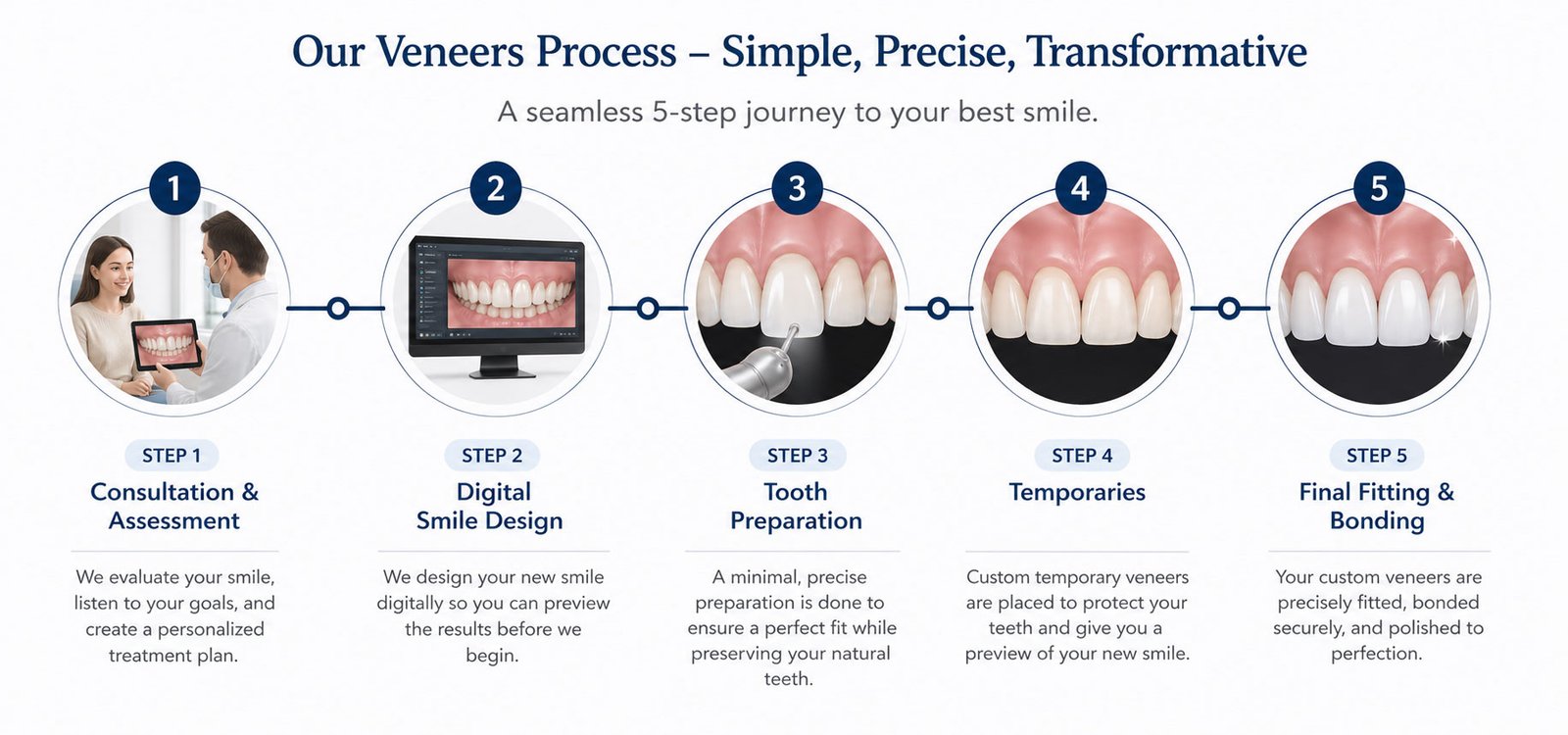
Understanding the process before arriving removes the most common sources of anxiety. Veneer treatment is completed across multiple visits within your stay. The exact number of visits and the time required at each depends on the number of teeth being treated and the type of veneer selected. For more detail, see the Istanbul veneer procedure guide.
Step 1: Consultation and Clinical Assessment
The consultation evaluates existing tooth colour, shape, gum levels, bite function, enamel availability, and the patient's aesthetic goals. Photographs and, where indicated, radiographs are taken. The dentist should explain which teeth will be treated, which type of veneer is recommended and why, what preparation will involve, and what the realistic outcome will look like for that specific patient's anatomy: not for a generic case.
Step 2: Digital Smile Design and Shade Selection
Digital planning can use clinical photographs, measurements, scans and software to discuss the proposed tooth proportions, shape and shade before preparation. It is a communication and planning aid, not a promise that the final result will be identical to a simulation. The patient should still approve the clinical plan, preparation limits and trial appearance before permanent bonding.
Step 3: Tooth Preparation
Where preparation is required, the dentist removes only the amount of tooth structure needed for the planned restoration, fit, margin and final contour. A commonly quoted range for some veneer preparations is approximately 0.3 to 0.7 mm, but a single figure cannot describe every tooth or case. Local anaesthetic may be used; temporary sensitivity, tenderness or an altered bite sensation can occur and should be reported if severe or persistent.
Step 4: Temporaries
Temporary restorations may be placed when teeth have been prepared and require protection or a provisional trial. They do not reproduce every optical property of the final ceramic. Report concerns about general length, contour, speech, comfort or bite before the final restorations are completed.
Step 5: Laboratory Fabrication
Permanent veneers are fabricated from impressions or digital scans taken after the preparation stage. Laboratory timing varies with case size, material, custom shade work, trial stages and any requested revisions. For selected cases at this clinic, the laboratory phase may be organised within the stated 5 to 7 day pathway; the timetable should not be compressed at the expense of try-in, consent or necessary corrections.
Step 6: Final Fitting and Bonding
The restorations are tried in before permanent bonding so the dentist can assess seating, margins, contacts, visible proportions, shade relationship and bite. Some concerns can be adjusted clinically; others may require laboratory revision before bonding. Once the agreed checks are complete, the restorations are bonded and the bite is reviewed. Appointment length depends on case size and complexity.
| Visit | What Happens | Approximate Duration |
|---|---|---|
| First clinical stage | After arrival | Examination, records, diagnosis, alternatives, consent and shade discussion |
| Preparation stage | When clinically confirmed | Preparation where indicated, scan or impression, and temporaries where required |
| Laboratory stage | Following working days | Fabrication, communication with the laboratory and any requested revision |
| Try-in and bonding | After laboratory completion | Clinical try-in, review, agreed corrections, bonding and bite check |
| Departure review | Before travel home | Final assessment, records, aftercare instructions and contact route |
What affects veneer cost in Turkey?
The final fee cannot be calculated reliably from one photograph. A quote may change after the dentist identifies decay, gum treatment, root-canal problems, old restorations, bite issues or the need for a different restoration type. Compare itemised treatment plans rather than headline package prices.
Number and type of restorations
A plan may contain veneers only or a mixture of veneers, crowns, bonding and preliminary treatment. Each tooth should be listed separately.
Material and laboratory work
Ceramic type, technician time, custom shade characterisation, trial stages and requested laboratory revisions affect the fee.
What the quote includes
Clarify examinations, X-rays, temporary restorations, medication, night guards, transfers, accommodation and remedial-care terms.
Why do international patients consider Turkey for veneers?
Patients often compare Turkey with private treatment in their home country because Istanbul offers a large choice of dental providers, laboratory-made restorations, international-patient coordination and the possibility of arranging several appointments during one trip. Potential cost differences are relevant, but price alone does not show whether the diagnosis, restoration design or tooth preparation is appropriate.
A concentrated clinic pathway
Selected cases may be organised across several appointments within one stay, provided sufficient time is allowed for examination, laboratory fabrication, try-in, revisions and a final bite review.
Access to different materials and laboratories
The same global material brands may be available in several countries. The final result also depends on case selection, preparation design, technician skill, bonding conditions and quality control: not the brand name alone.
International-patient coordination
Multilingual communication, appointment coordination and travel guidance can simplify logistics. Clinical questions should still be answered by the treating dental team rather than only by a sales coordinator.
A potentially different total cost
Compare the complete treatment and follow-up cost, including travel, accommodation, time away from work, insurance, possible extensions, local follow-up and the possibility of returning for replacement or remedial care.
| Comparison point | What to establish |
|---|---|
| Named dentist | Who examines, prepares, tries in and bonds the restorations |
| Restoration design | Veneer, crown, bonding, onlay or no treatment for each tooth |
| Tooth preparation | Why preparation is needed and how much healthy structure may be removed |
| Laboratory | Named laboratory, material documentation, trial stages and revision process |
| Aftercare | Remote contact, local follow-up, urgent-care route and written remedial terms |
| Total cost | Treatment, travel, accommodation, insurance, possible extension and return-trip costs |
Why consider Istanbul for veneer treatment?
Istanbul is a major international city with direct air connections from many regions and a wide range of dental clinics and laboratories. This makes comparison easier, but also increases variation between providers. The decision should therefore be based on the named dentist, diagnosis, treatment design, laboratory relationship and follow-up: not on the city name alone.
Choice requires careful verification
A large provider market gives patients options, but websites may use similar marketing language. Verify the treating dentist, facility authorisation, laboratory, material and written aftercare independently.
Laboratory access can support staged treatment
Close communication between dentist and technician can support shade discussion, try-in and revisions when the schedule protects laboratory time rather than forcing a rapid finish.
Travel logistics can be planned around care
Choose accommodation within practical reach of the clinic and keep the final days flexible for checks or adjustments. The treatment timetable should determine the travel plan: not the other way around.
The city visit remains secondary
Plan sightseeing around the dental appointments, temporary restorations and recovery instructions. Do not shorten the clinical pathway to create more holiday time.
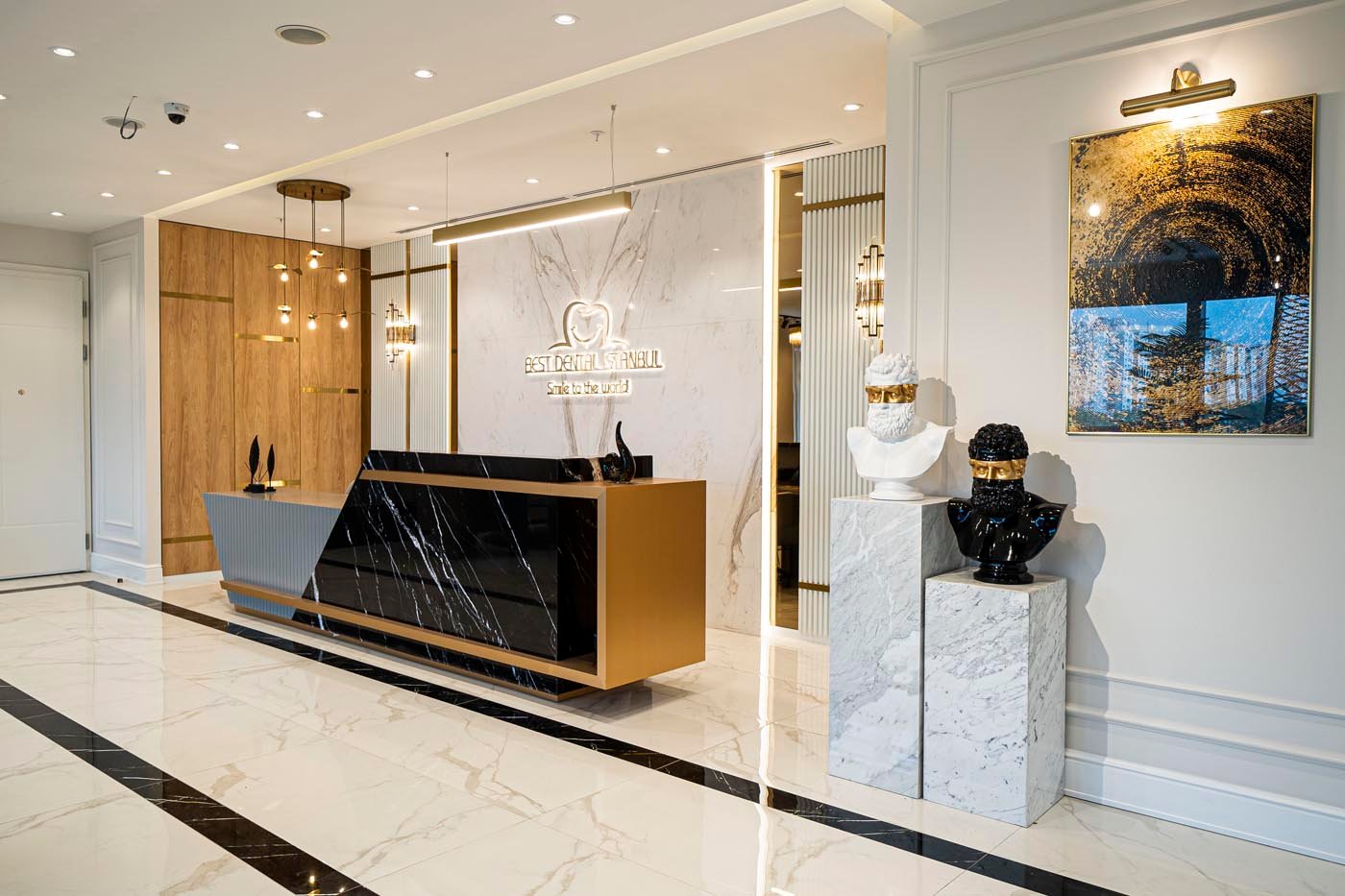
How long should you stay in Istanbul?
Selected laboratory-made veneer cases may be organised across roughly 5 to 7 days, but this is a planning range rather than a promise. The appropriate stay depends on the clinical findings, number and type of restorations, whether preliminary treatment is needed, laboratory workload, trial stages and any requested revision.
| Stage | Planning point |
|---|---|
| Arrival | Arrive before the first clinical appointment rather than on the same day. |
| Examination | The in-person findings may change the remote estimate, restoration type, tooth count or timetable. |
| Laboratory interval | Allow working time for fabrication and do not assume every case can follow the shortest schedule. |
| Try-in and bonding | Keep time for questions and revisions before permanent bonding. |
| Departure | Leave a buffer for the final bite check, records and any clinically necessary adjustment. |
How to assess veneer safety in Turkey
Veneer treatment can be appropriate in Turkey when diagnosis, consent, tooth preparation, materials, infection control and follow-up are managed properly by a qualified dentist. Country, certificate or material brand alone cannot guarantee a safe result. The individual treatment plan and the clinical system around it matter most.
One important additional risk of treatment abroad is interrupted follow-up. The placing clinic may be far away, and some concerns require an examination rather than photographs alone. Agree a direct clinical contact route, written remedial-care terms and a plan for routine or urgent local assessment before leaving Istanbul.
How to Verify a Dental Clinic in Turkey
To verify a dental clinic in Istanbul, patients should confirm the treating dentist's qualification, professional registration and relevant education or experience, the exact restorative material and bonding system, the laboratory's identity, and whether material and laboratory documentation can be provided, and whether the clinic holds a Health Tourism Authorisation Certificate from the Turkish Ministry of Health.
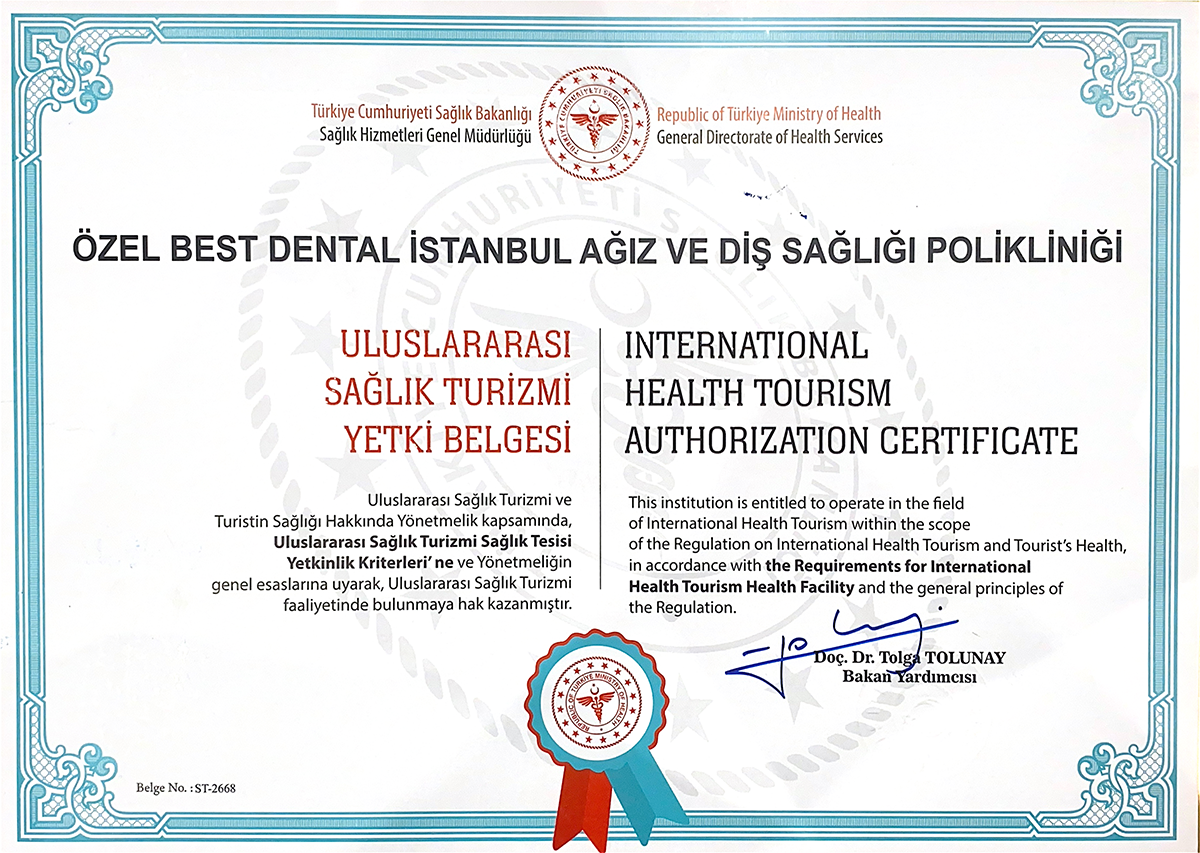
Warning Signs of an Unsafe Clinic
Red flags include a fixed plan or price before meaningful clinical information is reviewed; no named dentist before payment; generic “Hollywood Smile” marketing without a tooth-by-tooth diagnosis; reluctance to explain preparation, alternatives, laboratory work or limitations; no written aftercare route; and pressure to book travel or pay before questions have been answered. Digital planning can be useful, but its absence or presence alone does not determine clinical quality.
Veneer risks and realistic limitations
Veneers can perform well when the case is carefully selected and treatment is well executed, but they carry real limitations that every patient should understand before committing.
| Risk / Limitation | What It Means in Practice |
|---|---|
| Tooth sensitivity | Temporary sensitivity may occur; duration and severity vary |
| Veneer fracture | Risk is higher with heavy bite forces, clenching, grinding, trauma or unsuitable design; a night guard may be recommended |
| Bonding failure | Can occur; management ranges from re-bonding to replacement depending on the cause and condition of the veneer |
| Gum recession over time | Gum levels can change with ageing, periodontal health and brushing habits, which may expose a margin |
| Irreversibility | Prepared enamel does not regrow; commitment is permanent |
| Colour stability | Porcelain is more stain-resistant than composite, although margins and neighbouring natural teeth can change over time; adjacent natural teeth may yellow over years |
| Shade mismatch | Risk is reduced through shade planning, try-in and laboratory communication |
| Result not as expected | Risk is reduced by clear goals, diagnostic records, trial stages, realistic consent and approval before final bonding |
What to Do If Something Goes Wrong After You Return Home
Before leaving Istanbul, patients should confirm a direct contact route to the clinic, and identify a local dentist at home who is willing to act as a point of contact for minor issues. Minor adjustments: bite polishing, small chip repair: can be handled locally. Significant bonding failures or fractures should be reported to the placing dentist first, with photographs, before any further treatment is started.
Veneer aftercare and long-term maintenance
Veneers and the supporting teeth still require daily care and periodic review. Biting hard objects, using teeth as tools, clenching, grinding, poor plaque control and an unstable bite can increase the risk of damage or disease around restoration margins.
Step 1: Allow for the Adjustment Period
Temporary sensitivity can occur after preparation or bonding, and the bite may feel unfamiliar at first. The pattern and duration vary. Severe, increasing or spontaneous pain, swelling, a loose restoration or a bite that remains uncomfortable should be assessed rather than assumed to be part of normal adaptation.
Step 2: Maintain Meticulous Oral Hygiene
A ceramic veneer does not decay, but the supporting tooth and exposed margins remain vulnerable to plaque, decay and gum disease. Brush twice daily with fluoride toothpaste and clean between the teeth every day using the method advised by your dentist. Product choice and technique should protect the restoration margins without sacrificing plaque control.
Step 3: Avoid High-Risk Habits
Do not bite nails, pen lids, ice or other hard objects, and do not use front teeth as tools. Ceramic is generally more stain-resistant than composite, but bonding margins, neighbouring natural teeth and composite restorations can change over time. Follow individual dietary and hygiene advice rather than treating veneers as indestructible.
Step 4: Wear a Night Guard If Recommended
If your dentist recommends a night guard for bruxism, wear it consistently. Grinding and clenching can increase the risk of fracture, chipping or debonding. A correctly fitted night guard may be advised after the bite has been assessed.
Step 5: Attend Regular Dental Check-Ups
Veneers should be reviewed as part of regular dental care at an interval based on your oral health and risk profile. A dentist can check the margins, gums, bite, supporting teeth and signs of chipping or wear. International patients should decide before treatment where routine reviews will take place and how records will be shared if a local dentist needs to help.
Step 6: Know When to Call the Clinic
Contact the clinic if a restoration fractures, feels loose, develops a sharp edge or the bite feels wrong. Seek prompt local assessment for severe or increasing pain, swelling, trauma, fever or signs of infection. Photographs can support initial triage but cannot replace an examination when symptoms are concerning.
A practical veneer trip plan
Book travel only after the clinic has reviewed suitable records and explained the expected appointment sequence. Keep the return journey flexible because examination findings, laboratory revisions or bite adjustments can extend the plan.
Before travel
Share medical history, medicines, allergies, dental records and recent radiographs where available.
During treatment
Leave time for examination, consent, preparation, temporaries, laboratory work, try-in and revisions.
Before departure
Complete the final bite check and collect the tooth chart, records, material details and aftercare instructions.
After returning home
Arrange routine local reviews and know where urgent assessment is available for pain, swelling, trauma or infection.
Your veneer handover record before flying home
A polished final photograph is not a clinical handover. Before leaving Istanbul, ask for a concise record that another dentist can understand if you need routine care, an adjustment or urgent assessment after returning home.
Treatment record
- Final tooth chart showing veneer, crown, bonding, onlay or untreated tooth
- Pre-treatment diagnosis and treatment completed
- Relevant radiographs, scans and pre- and post-treatment photographs
- Final shade, ceramic or composite material and named laboratory
Follow-up record
- Bite checks or adjustments completed before departure
- Cleaning, diet and night-guard instructions
- Symptoms that require urgent contact
- Direct clinical contact, routine review schedule and written remedial-care terms
How to choose a dentist for veneers in Turkey
The treating dentist and the proposed clinical plan are central to the decision. Relevant experience, conservative case selection, a clear laboratory workflow and careful try-in and bonding stages can influence fit, appearance and long-term maintenance. No promotional offer, “deal” price or last-minute availability should replace dentist-level verification. Use the clinic’s seven-point selection checklist.
Seven points to verify before booking
- Qualification and relevant training: confirm the dental degree, professional registration and documented education or experience relevant to aesthetic and restorative treatment. Do not rely on an unverified “specialist” label.
- Relevant case experience: ask how often the named dentist manages cases comparable to yours and request examples with similar starting conditions. Case numbers alone do not establish quality.
- Named laboratory: ask which laboratory fabricates the veneers and what the dentist's working relationship with them is. Vague answers are a warning sign.
- Planning and trial stages: ask which photographs, scans, wax-ups, mock-ups or digital planning methods will be used and when you can review the proposed result before irreversible treatment.
- Before-and-after portfolio: request examples across different shade corrections, not just the best three cases. Consistent quality across a range of starting points is the marker of skill.
- Remote follow-up policy: confirm what happens if a veneer fractures, chips, or shows a bonding issue after you have returned home.
- Health Tourism Authorisation Certificate: verify the clinic holds official certification from the Turkish Ministry of Health for treating international patients.
Questions to Ask During Consultation
- How many full-arch veneer cases do you personally complete each year?
- Which laboratory will fabricate my veneers, and can I see examples of their work?
- Will I have a digital smile design preview before any preparation takes place?
- How much tooth preparation will be required for my case?
- What type of veneer do you recommend for my goals, and why?
- What happens if a veneer fractures or the bonding fails after I return home?
- What maintenance will my veneers require, and what should I avoid?
- Will I have a temporary set between preparation and bonding?
| Check | How to Verify |
|---|---|
| Dental degree and qualification | Clinic biography or Turkish Dental Association register (tdb.org.tr) |
| Relevant postgraduate or continuing education | Published biography and verifiable course, programme or certificate details |
| Health Tourism Authorisation | Turkish Ministry of Health HealthTürkiye portal |
| Laboratory identity | Ask directly: a confident dentist names their lab |
| Before-and-after portfolio | Website gallery; ask for additional cases matching your starting point |
| Patient reviews | Google Maps, independent review platform; look for detail about the process, not just the result |
| Remote follow-up policy | Written terms from the clinic before booking |
Dentist information: Emre Arslan
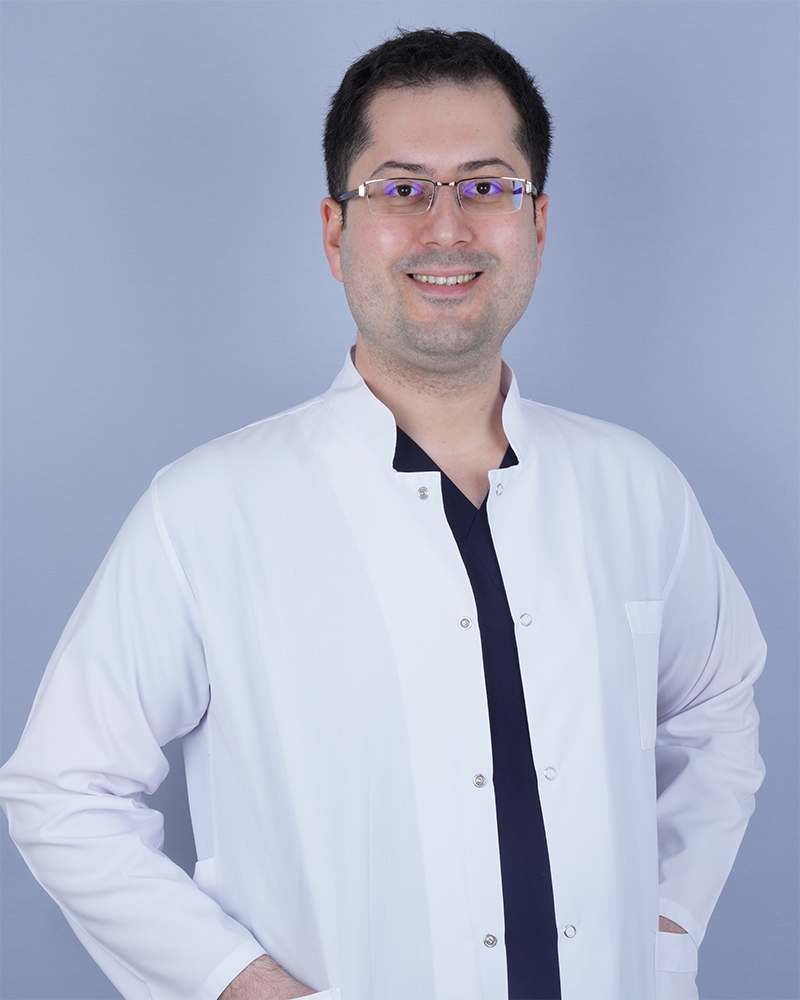
Dentist Emre Arslan graduated from Gazi University Faculty of Dentistry in 2018. The clinic’s published biography states that he joined Best Dental Istanbul in 2021 after private-practice experience in Istanbul and is a member of the Turkish Dentists Association (TDB).
The same biography lists training in porcelain laminates and direct composite restorations. This page does not claim a separate recognised dental specialty qualification that is not shown in the published profile.
International patient planning: before, during and after treatment
Every international patient faces the same core continuity-of-care questions, regardless of nationality: what must be checked before travel, how the clinic stay will be organised, what records will be provided and where examination or urgent care can be obtained after returning home.
Before travelling
Share relevant medical and dental history, current medicines, allergies, recent radiographs and clear photographs. Confirm the provisional plan, expected stay, payment terms and what findings could change the treatment after examination.
During the clinic stay
Keep enough time for examination, consent, preparation, temporary restorations where required, laboratory fabrication, try-in, revisions and a final bite check. Do not schedule every day around tourism.
Before departure
Collect the final tooth chart, invoices, radiographs or scans, before-and-after photographs where available, material details, laboratory information, aftercare instructions and a direct clinical contact route.
After returning home
Arrange routine dental reviews locally and identify where urgent assessment can be obtained. Contact the placing clinic with symptoms and photographs, but do not delay urgent local treatment for pain, swelling, trauma or infection.
Insurance and financial planning
Tell the insurer that the trip includes planned dental treatment. Check exclusions for complications, trip extensions, missed flights, emergency care and return treatment. Ordinary travel or dental insurance may not cover elective care abroad.
Communication and consent
Make sure you can communicate directly with the clinical team in a language you understand. Consent should explain alternatives, irreversibility, expected limitations, likely maintenance and what the clinic can and cannot manage remotely.
How to assess realistic veneer results
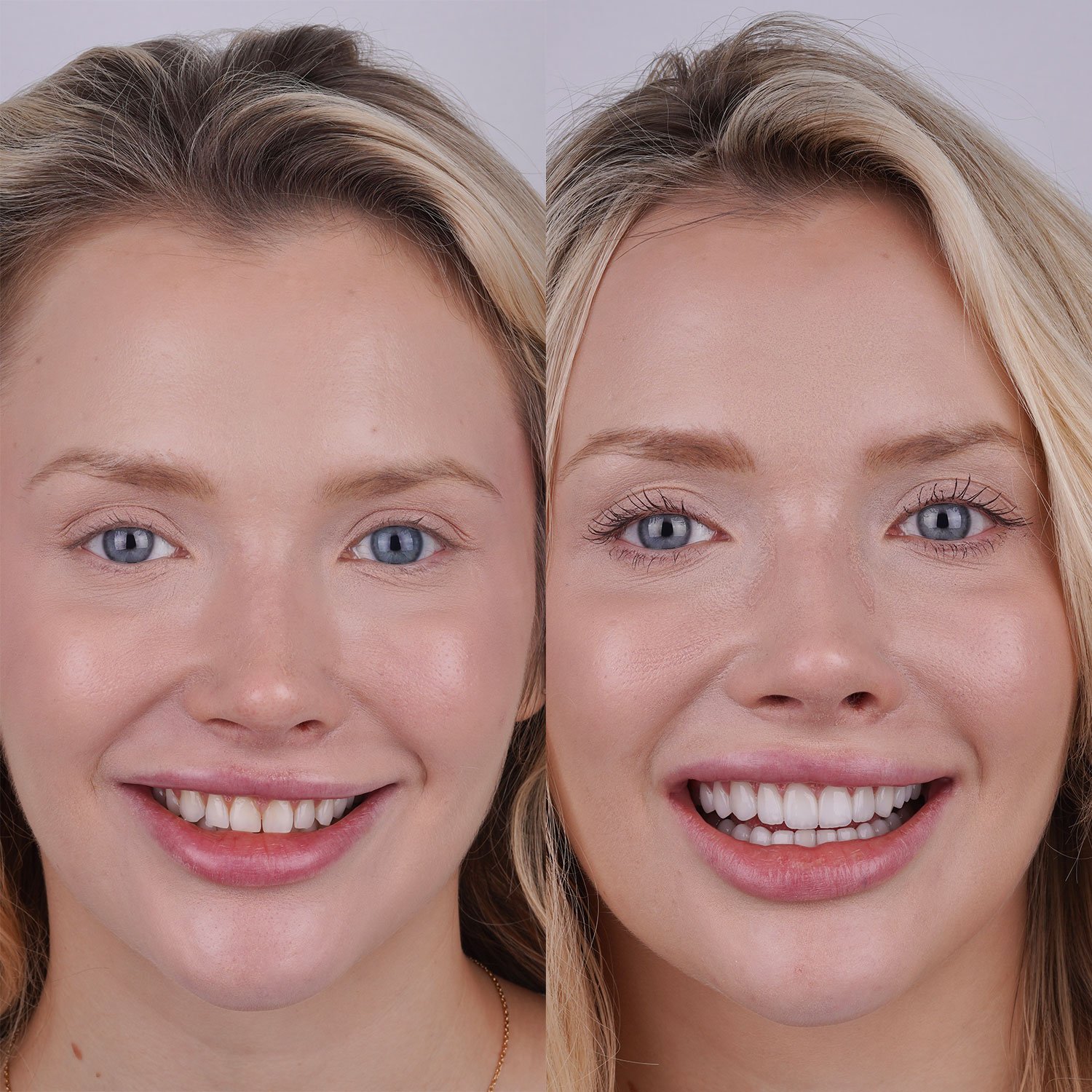
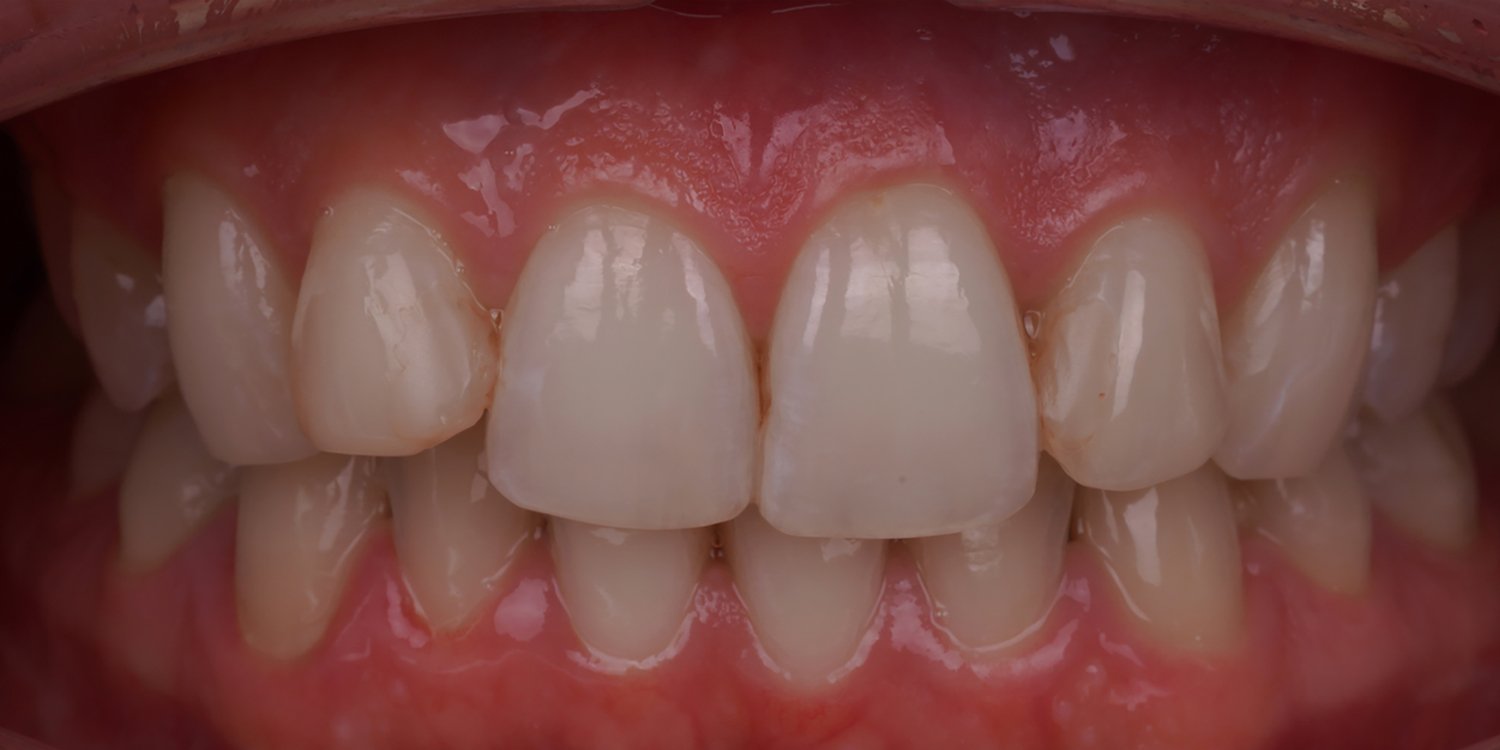
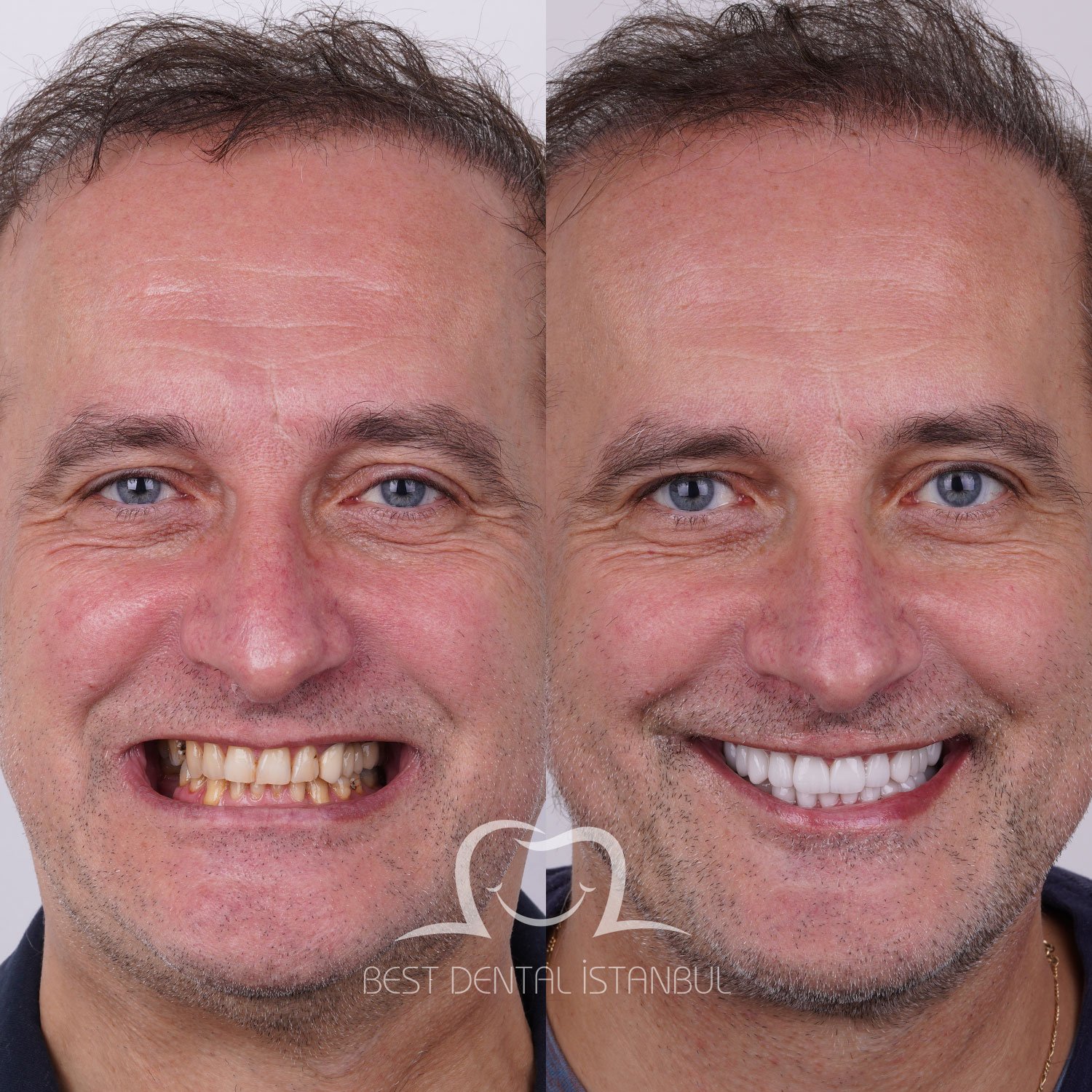
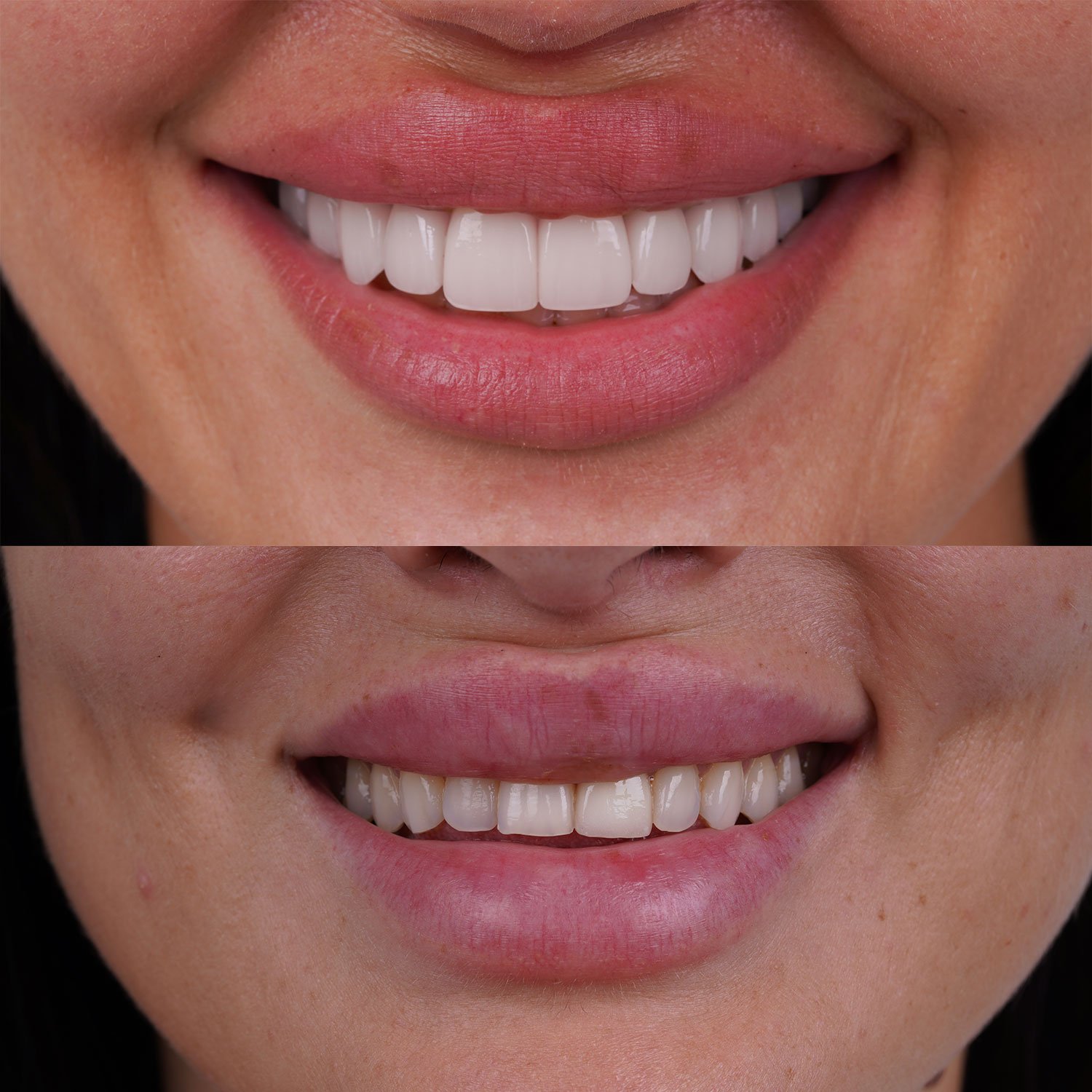
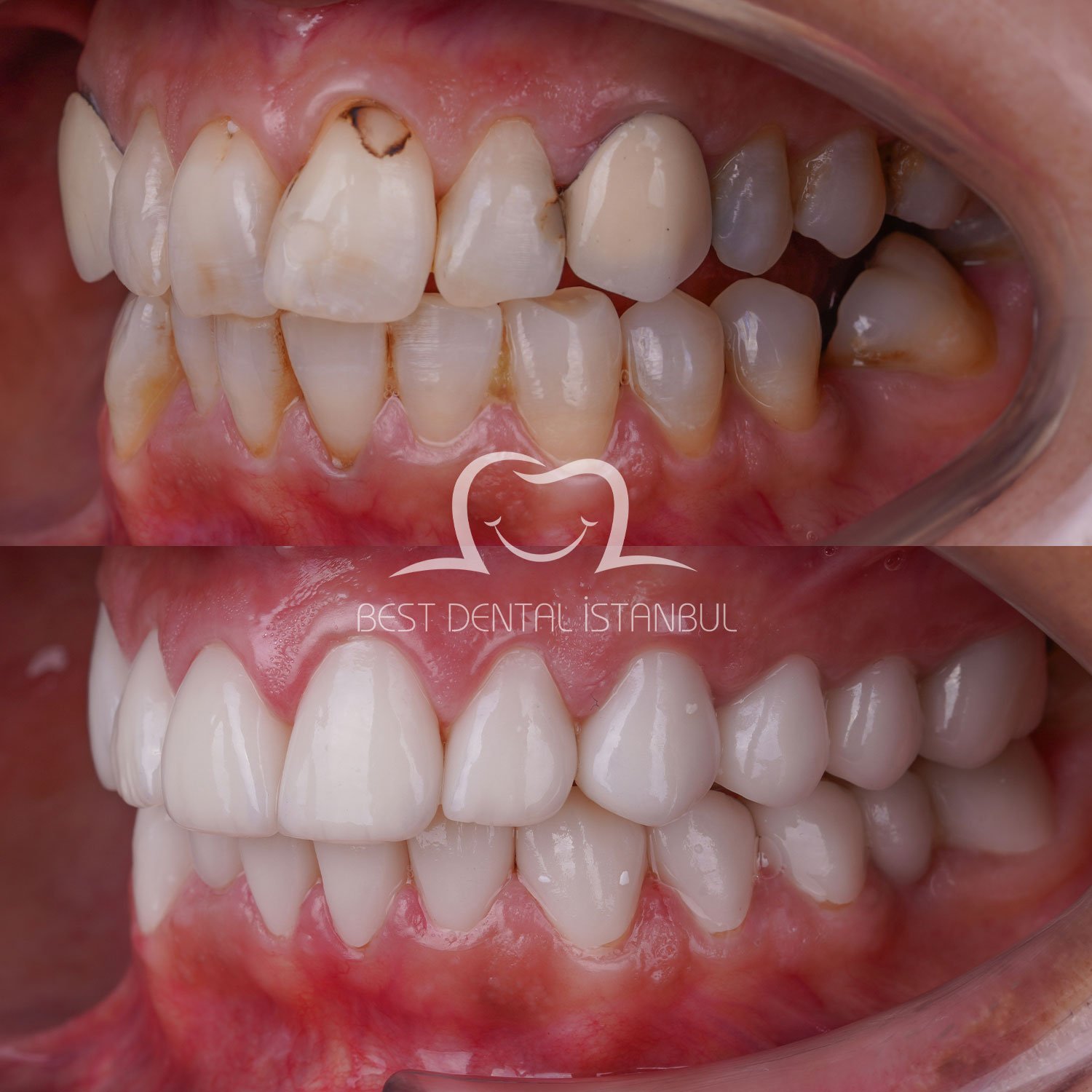
Before-and-after photographs should be interpreted critically. Lighting, angle, lip position, moisture and image processing can change how teeth appear. Useful case documentation identifies the restoration type, treated teeth and follow-up point. Aesthetic judgement should consider the relationship between the restorations, lips, gums, neighbouring teeth and face.
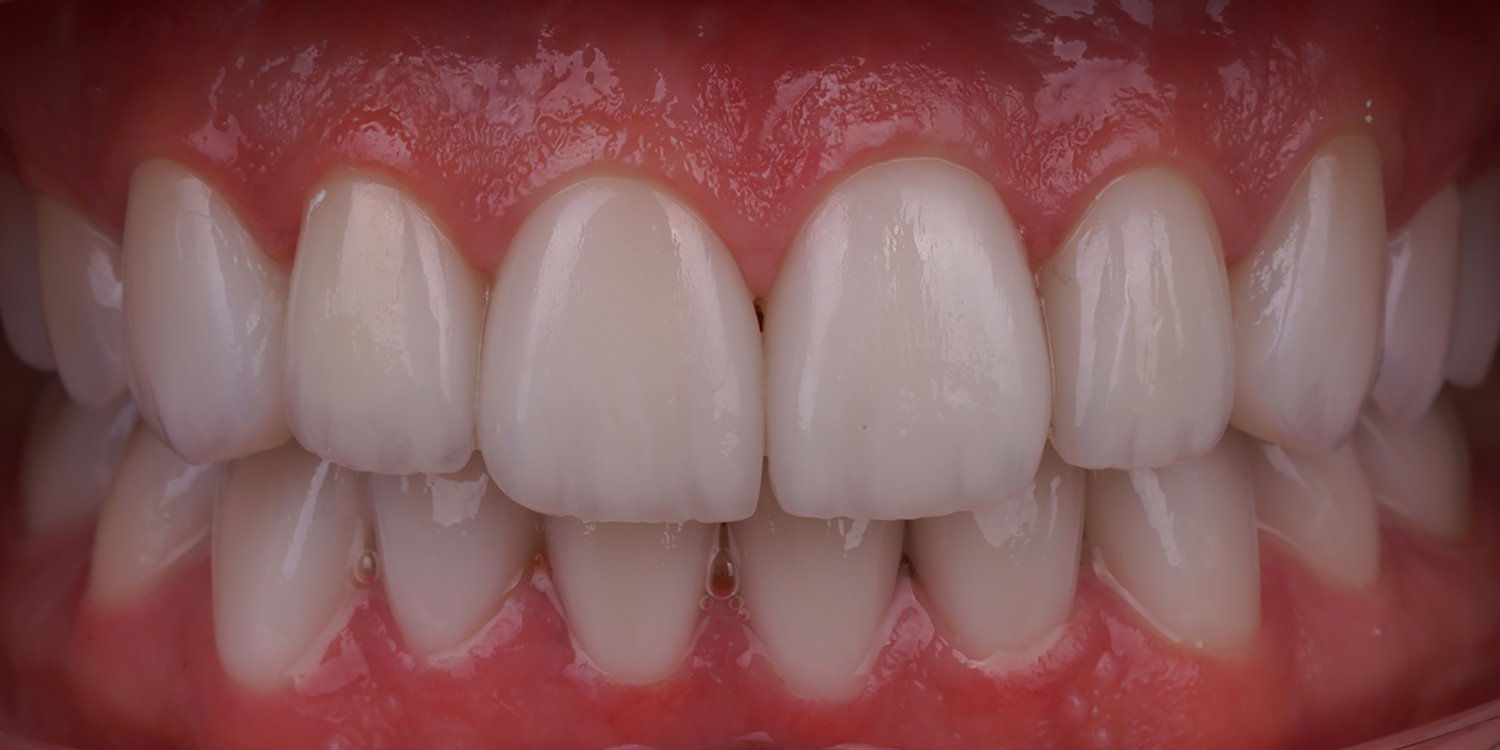
 Before
After
Before
After
Drag the photograph or the round handle left and right. You can also use the range control or keyboard arrow keys. Clinical photography should be interpreted with treatment details and follow-up information.
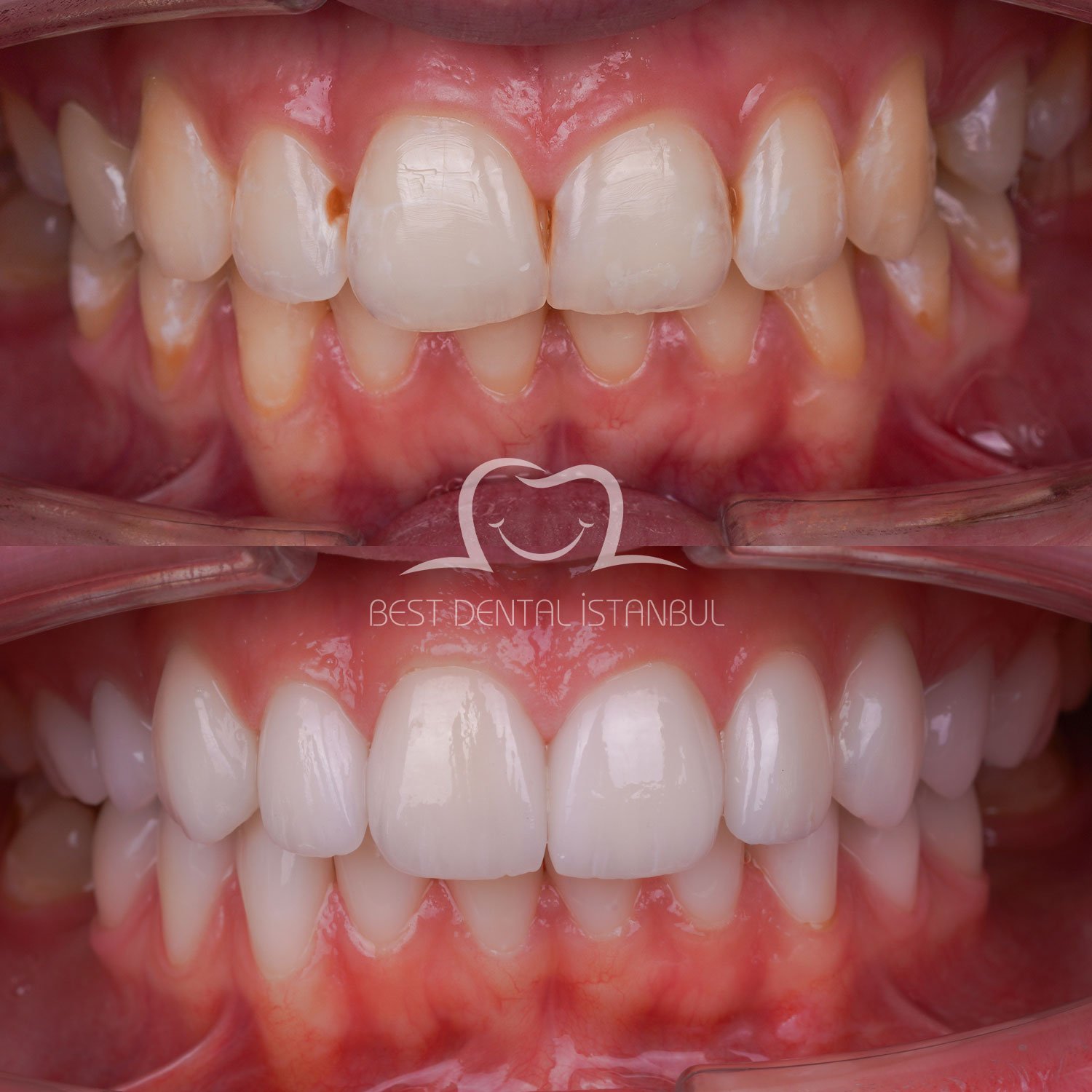
What the Result Looks Like Immediately After Bonding
Immediately after bonding, new ceramic, clinical lighting and recently handled gum tissue can make the result look different from its settled appearance. Temporary sensitivity or a changed bite sensation can occur. The dentist should check contact points, margins and occlusion before departure, and the patient should report anything that feels high, painful or unstable.
What Settles Over the First 4 to 6 Weeks
During the first weeks, the gums and bite may adapt, but there is no single timetable that applies to every patient. Persistent bleeding, increasing sensitivity, spontaneous pain, swelling, looseness or an uncomfortable bite should be reviewed. Follow-up photography can be useful, but it cannot replace an examination when symptoms are concerning.
Long-Term Appearance
Ceramic veneers are generally more resistant to staining than composite, but no appearance remains unchanged forever. Gum levels, restoration margins and neighbouring natural teeth can change over time. Long-term colour planning and routine reviews therefore matter, especially where only part of the visible smile zone is restored.
Veneer treatment and smile-transformation videos
These short clinic videos were already used on the existing page. They are presented with lightweight poster images and load from YouTube only after the visitor chooses to play them.
Smile transformation with E.max veneers
Short-form clinic video showing a veneer smile-transformation result.
E.max veneer treatment highlights
Short-form clinic video focused on E.max veneer treatment and the visible result.
Laminate veneers in Turkey
Short-form clinic video presenting laminate veneer treatment imagery.
Videos and patient experiences do not predict another patient's diagnosis, treatment plan or result.
What patients say about Best Dental Istanbul
Ratings can change as new reviews are published. Open each platform to read its complete and current review history.
How to read patient reviews critically
Patient reviews are useful for understanding communication, scheduling, temporary restorations and aftercare, but they should not be treated as clinical evidence.
- Prefer reviews that describe the dentist, treatment stages and follow-up rather than only the final appearance.
- Check whether the reviewer states the restoration type and number of teeth treated.
- Look for patterns across many reviews instead of relying on one dramatic story.
- Open the original Google or Yandex profile to confirm that the review exists.
- Remember that an individual review cannot predict another patient's result.
Common myths about veneers in Turkey
Myth 1: "Veneers in Turkey Use Inferior Materials"
Misleading. Internationally distributed ceramic brands may be available in many countries, but a brand name alone does not make two treatments equivalent. Diagnosis, restoration design, preparation, laboratory work, bonding and follow-up all influence the result.
Myth 2: "All Turkish Clinics Are the Same"
False. Provider quality and treatment philosophy vary within every country. Evaluate the named dentist, diagnosis, laboratory workflow, consent process and aftercare rather than making a country-level assumption.
Myth 3: "Veneers Are Painless"
Too absolute. Local anaesthetic may make preparation more comfortable, but temporary sensitivity, tenderness, anxiety or an unfamiliar bite can still occur. Pain experience varies. Severe, increasing or spontaneous pain should be assessed rather than dismissed as normal.
Myth 4: "No-Prep Veneers Are Always the Better Choice"
False. No-prep or minimal-prep veneers can suit selected teeth where added volume will not create an over-contoured result. Other teeth may need preparation or a different treatment altogether. The appropriate design is determined by anatomy, colour, position, bite and restoration thickness: not by a universal preference for “no drilling”.
Myth 5: "You Can Fly In and Fly Out in 3 Days"
Usually unrealistic for a multi-tooth laboratory case. The timetable must allow diagnosis, any necessary preparation, fabrication, try-in, patient approval, bonding and a final check. Some selected cases may follow a different schedule, but travel should be planned around the clinical process rather than forcing the process into a pre-booked short trip.
Myth 6: "Veneers Last Forever"
False. Selected studies report high ten-year survival for porcelain laminate veneers, but survival is not the same as a lifetime guarantee. Tooth condition, bonding substrate, bite, habits, maintenance and case design affect outcomes, and repair or replacement may eventually be required.
Myth 7: "You Can Always Get a Revision Later"
Misleading. A veneer can sometimes be repaired, re-bonded or replaced, but the available tooth structure and cause of failure must be reassessed. Replacement may require further preparation and can become more complex as tooth structure or enamel is lost. The first treatment decision should therefore be made conservatively.
Frequently asked questions about veneers in Turkey
Are dental veneers in Turkey safe?
Veneers can be appropriate when the diagnosis, tooth preparation, material, consent and follow-up are properly managed by a qualified dentist. The clinical risks include sensitivity, fracture, debonding, gum or margin problems and future repair or replacement. Travelling also creates continuity-of-care questions, so agree a written remote contact and aftercare plan before treatment.
How long does a full set of veneers take in Istanbul?
Selected laboratory-made cases may be organised over approximately 5 to 7 days and several clinic stages, but the timetable depends on examination findings, case size, laboratory work, trial stages and requested revisions. Do not book a return flight that forces the clinic to skip a necessary check or correction.
How many teeth are covered in a full set of veneers?
“Full set” is not a clinical tooth count. Some plans involve selected upper teeth; others include visible teeth in both arches, and some teeth may need a crown, bonding or no treatment rather than a veneer. Ask for a tooth-by-tooth plan based on the smile line, tooth condition, colour transition and bite. See the full-set veneer planning guide.
Do veneers hurt?
Local anaesthetic may be used when tooth preparation is required. Temporary sensitivity, tenderness or an unfamiliar bite can occur, and the experience varies by patient and procedure. Severe, increasing or spontaneous pain, swelling or a loose restoration should be assessed promptly. Discuss anxiety and pain-control options before treatment.
How long do veneers last?
Selected studies report high ten-year survival for porcelain laminate veneers, including estimates above 93%, but this is not an individual guarantee. Longevity depends on tooth condition, enamel bonding, design, bite, clenching or grinding, oral hygiene and maintenance. Composite restorations generally need more repair and maintenance than ceramic, and any veneer may eventually need repair or replacement.
What is the difference between E.max and zirconia veneers?
E.max is a lithium-disilicate glass-ceramic used for selected aesthetic veneers and crowns. Zirconia is a high-strength, generally more opaque ceramic used extensively for crowns and bridges. A restoration marketed as a “zirconia veneer” may use a different preparation or coverage design, so ask whether the planned restoration is a facial veneer or a full-coverage crown and why that design is needed for that tooth.
Can veneers fix crooked teeth?
Veneers can mask minor misalignment and create the appearance of a straighter smile by adjusting tooth shape and position optically. They cannot correct significant orthodontic misalignment involving tooth root position: this requires orthodontic treatment. If the misalignment is significant, the dentist should recommend orthodontics first rather than placing veneers over teeth that are substantially out of alignment.
What is digital smile design?
Digital smile design is a planning and communication approach using photographs, measurements, scans or software to discuss proposed tooth proportions and appearance. It can help the dentist, technician and patient review a plan, but it is not a guarantee that the final result will match a simulation exactly. Ask what trial or approval stage is included before permanent bonding.
How much do veneers cost in Turkey?
The fee depends on the number and type of restorations, material, laboratory work, dentist time, preliminary treatment and what the travel package includes. Compare itemised, tooth-by-tooth plans rather than package names. See the dedicated veneer cost guide for the clinic's current pricing information.
What happens if a veneer breaks after I return home?
Contact the placing clinic, describe the symptoms and send clear photographs before arranging non-urgent treatment. A local dentist may need to examine the tooth, especially if there is pain, looseness, trauma or a sharp edge. Management can range from polishing or repair to re-bonding or replacement. The clinic’s written aftercare and remedial-care terms should be agreed before treatment.
Can I eat normally with veneers?
Most patients return to a varied diet after the initial adjustment period, but veneers are not indestructible. Avoid using front teeth as tools and be cautious with ice, bones, hard objects and habits that create concentrated force. Follow the treating dentist’s instructions where the bite, temporary restorations or a night guard require additional care.
Will my veneers look natural?
A natural-looking result depends on case selection, tooth preparation, ceramic or composite design, shade, translucency, surface texture, gum health and laboratory work. Ask to see cases with a similar starting condition and discuss how the planned shape and colour will relate to your face, lips and untreated teeth. Individual results vary.
How do I book a consultation?
Send recent, clear photographs of your smile, any available dental records or X-rays, and a short description of what you would like to change. The clinic can discuss possible treatment categories, an approximate tooth count and an initial price range. This is a preliminary discussion, not a diagnosis or final quote; the plan is confirmed only after an in-person examination.
How to request a preliminary veneer assessment
Step 1: Send Your Smile Photos
Send recent, clear photographs: front-facing full smile, relaxed lips and side or three-quarter views where possible. Photographs can support discussion of visible concerns and smile width, but they cannot assess hidden decay, vitality, periodontal pockets, all bite contacts or the available bonding surface.
Step 2: Receive Your Assessment
The clinic can provide a preliminary view of possible suitability, likely treatment categories, an approximate tooth count and an initial price range from suitable records. This is not a diagnosis or final quote. The plan may change after an in-person examination, radiographs where indicated, and assessment of the teeth, gums and bite.
Step 3: Confirm Dates and Travel Plan
Once you decide to proceed, treatment dates are confirmed, travel timing is planned, and accommodation guidance is provided. All details are confirmed in writing before any payment is made.
Step 4: Arrive for Your Consultation and Treatment
Arrive at least the evening before your first clinic appointment. The consultation on Day 1 confirms the full treatment plan and preparation is scheduled for the same day or Day 2.
Contact Options
Contact the clinic by WhatsApp, email, or through the contact form on the website. WhatsApp is generally the fastest channel for international patients and allows you to send photographs directly.
Clinical sources and editorial standard
Clinical statements on this page are written for patient education and are separated into three types: published evidence, clinic-specific information and typical planning ranges. Evidence percentages describe study groups; clinic timings describe selected workflows; neither is a personal guarantee. Diagnosis, preparation, material, tooth count, timetable and price must be confirmed after an in-person examination.
- American Dental Association, MouthHealthy: Veneers
- NHS: Dental treatments: veneers
- Alenezi et al., 2021: Long-Term Survival and Complication Rates of Porcelain Laminate Veneers
- Klein et al., 2025: Long-term survival of ceramic laminate veneer materials
- NHS: Treatment abroad checklist
- Republic of Türkiye Ministry of Health: Authorised healthcare providers
- US Centers for Disease Control and Prevention: Medical tourism risk and continuity-of-care guidance
Medical information notice: this page provides general education, not a diagnosis or personal treatment plan. Remote photographs may support an initial discussion but cannot establish decay, periodontal health, enamel availability, pulpal status or the complete bite. The treating dentist must confirm suitability and obtain informed consent in person.
Preliminary assessment
Start with photographs, questions and a provisional discussion
Send a front-facing smile, relaxed-lip photographs, any recent dental X-rays and a short explanation of what you would like to change. The final plan is confirmed only after clinical examination.